History, Marketing Classes Intertwined by Lunch and Coca-Cola
Leigh Thomas
Contributing Writer
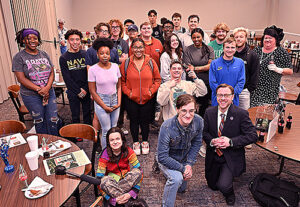
When Door Dash is just a click away and food portions are super-sized, it is difficult to grasp the food rationing associated with World War II. Earlier this semester, Professors Kirk Hansen and Maria Kithcart demonstrated this unique situation to their World War II and Business Marketing classes, respectively, in a special lunchtime experience.
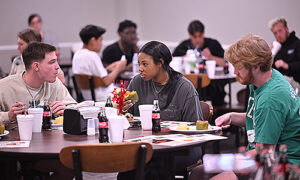
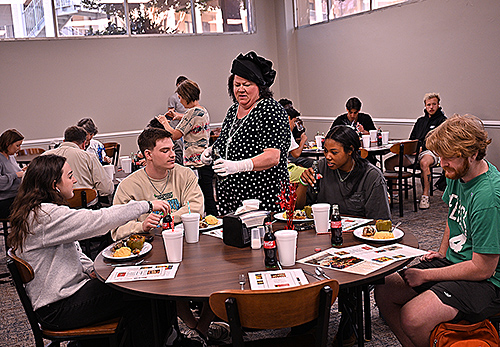
Students gathered in the Burgess Student Center Fireplace Room to dine on recipes created when basic ingredients such as flour, sugar, and meat were being rationed in the United States. The idea for the lesson was born out of their shared love of history and a cookbook titled “Grandma’s Wartime Kitchen.”
“I’ve been thinking about something like this for a while,” Dr. Hansen said. “I mentioned it to Maria because we have a mutual interest in the Second World War, particularly the societal impacts. She bought the cookbook, and it took off from there.”
Students were served dishes from the cookbook, including carrot pie, which was commonly substituted for pumpkin pie; squash biscuits, with squash used as a filler and sweetener; meatloaf potatoes; and stuffed peppers. During wartime, meat was often combined with homegrown garden vegetables to add substance.
Some students in attendance were pleasantly surprised with the result. Jadon Welch, a junior in Professor Kithcart’s class, said, “I loved it, and I enjoyed being able to step away from the classroom. The homecooked food really resonated with me because it’s similar to some of my family’s recipes.”
John Wilson, a senior in Dr. Hansen’s class, added, “I thought the food was awesome, and I was not expecting it to be good. It’s interesting that backyard gardens were encouraged during the war to supplement the food supply, and you can see in these recipes how the vegetables make a big difference.”
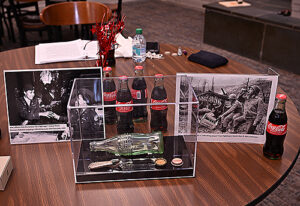
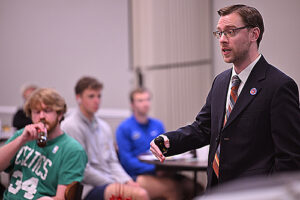
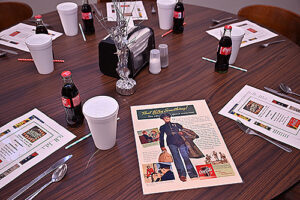
The product linking the history and marketing lessons, and anchoring the day’s lecture, was one all students were familiar with: old-fashioned, glass-bottled Coca-Cola. Dr. Hansen presented a historical account of Coke’s global development during World War II, and Professor Kithcart connected the company’s patriotic messaging to its increased sales and lasting impact on the advertising landscape.
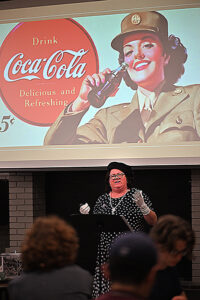
“Effective marketing is focused on good storytelling, and Coke mastered the storytelling aspect in its ads,” Professor Kithcart said. “Coke homed in on the emotions of patriotism and supporting the cause by giving soldiers in the field a taste of home.”
During the war, Coke prioritized its availability to soldiers at home and abroad. Through its clever marketing and government lobbying, the company secured an exemption from sugar rationing and expanded its bottling plants to 44 countries. Its advertising took on a deeper purpose with messages designed to boost morale and foster national unity. As a result, Coke experienced a 20 percent increase in profits from 1941 to 1948 and continues to dominate the beverage market and influence advertising strategy.
“I’m not a history buff, so it was cool to learn how Coke changed over time with its wartime marketing, shifting its message from one of luxury to one evoking emotion,” Welch said.
In addition to sampling recipes and learning about Coke’s history, students viewed printed wartime Coke advertisements, sample K-ration boxes from the time, and Coke memorabilia. The experiential learning opportunity encouraged them to imagine themselves in a much different time.
“I want the students to be curious, to put themselves in others’ shoes. In history, we talk about the past and struggles people faced, so I hope that by telling students a good story they experienced a taste of that time,” Dr. Hansen said.
“I deeply love history and business, and being able to tie those together is rewarding,” Professor Kithcart said. “The experiential aspect of this lesson offered a tangible way of looking at the intangible. We stepped back in time and looked at advertising in a fresh way.”